Blogs

Author: Aarohi Gupta

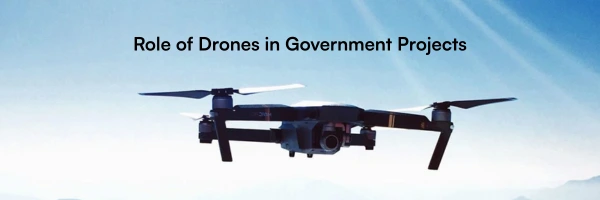
Role of Drones in Government Projects

Across India and globally, government agencies are increasingly turning to drones to improve efficiency, reduce costs, enhance safety, and access hard-to-reach areas. From agriculture and infrastructure inspection to surveillance, disaster response, and urban planning, drones have evolved from experimental tools into mission-critical assets for public sector projects.

Table of Contents
  1. Introduction: Why Governments Are Rapidly Adopting Drones
  2. The Rise of Drone Technology in Indian Government Projects
  3. Key Government Sectors Using Drones Today
  4. Types of Drones Used in Government Applications
  5. Government Drone Procurement: How the Ecosystem Works
  6. Policies, Regulations, and Compliance for Businesses
  7. Business Opportunities in Government Drone Projects
  8. Challenges Businesses Must Prepare For
  9. Why Choosing the Right Drone Technology Partner Matters
  10. How Skykart Supports Government & Enterprise Drone Needs
  11. The Future of Drones in Public Sector Projects
  12. Conclusion
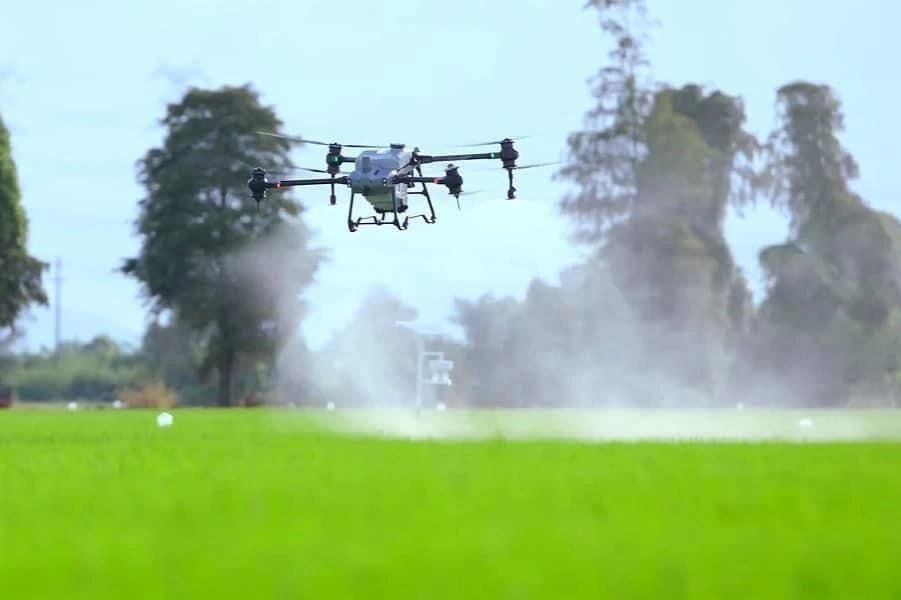
A drone flying over a lush green field, spraying fertilizer or pesticide.

Introduction: Why Governments Are Rapidly Adopting Drones

For businesses operating in the drone ecosystem — including manufacturers, system integrators, service providers, and equipment suppliers — understanding how government drone projects work is no longer optional. It is a strategic necessity.

This blog explores the role of drones in government projects, the opportunities they present, and what businesses need to know to participate effectively in this rapidly growing sector.

The Rise of Drone Technology in Indian Government Projects

India has witnessed a significant push toward drone adoption, especially after the liberalization of drone rules and the launch of initiatives like Drone Shakti and Digital Sky.

Government departments are increasingly using drones to:

  • Replace manual surveys
  • Improve data accuracy
  • Reduce human risk
  • Speed up project execution
  • Enable real-time monitoring

What was once limited to defense and security has now expanded into civil, agricultural, industrial, and urban governance applications.

This shift has opened doors for private businesses to collaborate with government agencies through tenders, pilots, and long-term deployments.

Key Government Sectors Using Drones Today

1. Agriculture & Rural Development

Agriculture remains one of the largest adopters of drones in India. Government projects utilize drones for:

  • Crop spraying and fertilizer distribution
  • Crop health monitoring
  • Precision farming initiatives
  • Subsidy-backed drone programs for farmers

Agriculture drones, especially 10-litre, 20-litre, and 50-litre spraying drones, are now central to state-level agricultural modernization efforts.

2. Infrastructure & Smart Cities

Drones play a vital role in:

  • Road and highway inspection
  • Bridge and powerline monitoring
  • Railway track surveys
  • Smart city mapping and planning

High-resolution cameras, LiDAR, and RTK-enabled drones help governments collect accurate geospatial data faster than traditional methods.

3. Disaster Management & Emergency Response

During floods, earthquakes, fires, and landslides, drones are used for:

  • Search and rescue operations
  • Damage assessment
  • Live aerial surveillance
  • Supply delivery to inaccessible areas

This has made drones indispensable for NDMA and state disaster response teams.

4. Surveillance, Law Enforcement & Border Monitoring

Police departments and security agencies deploy drones for:

  • Crowd monitoring
  • Traffic management
  • Event security
  • Border surveillance

Thermal cameras, night vision payloads, and long-endurance UAVs are commonly used in such projects.

Types of Drones Used in Government Applications

Government projects require specialized drones, not consumer-grade devices. Common categories include:

  • Agricultural Spraying Drones (10L–50L payload capacity)
  • Survey & Mapping Drones with RTK/PPK
  • Surveillance Drones with thermal and night vision
  • Inspection Drones for utilities and infrastructure
  • Heavy-Lift Enterprise Drones for industrial payloads

Each application demands different specifications such as flight endurance, payload compatibility, camera resolution, weather resistance, and redundancy systems.

Government Drone Procurement: How the Ecosystem Works

Government drone procurement typically follows a structured process:

  1. Tender or RFP issuance
  2. Technical evaluation
  3. Field demonstrations or pilot projects
  4. Commercial evaluation
  5. Deployment and training

Businesses participating in government projects must ensure:

  • DGCA-compliant drones
  • Approved components and firmware
  • Documentation and certifications
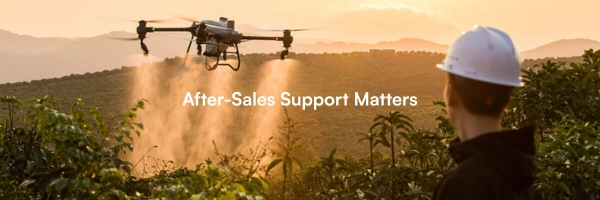
  • After-sales support and maintenance readiness

Understanding this procurement lifecycle is crucial for companies aiming to scale in the public sector.

Policies, Regulations, and Compliance for Businesses

Compliance is a non-negotiable factor in government drone projects. Businesses must be aware of:

  • DGCA drone rules
  • Digital Sky platform requirements
  • Remote ID and geofencing norms
  • Import and component regulations
  • Data security and privacy guidelines

Failure to comply can lead to project rejection or blacklisting, making regulatory awareness a key business competency.

Business Opportunities in Government Drone Projects

Government drone adoption has created opportunities beyond just selling drones. Businesses can participate as:

  • Drone manufacturers
  • Component suppliers
  • Payload integrators
  • Software and analytics providers
  • Training and certification partners
  • Maintenance and AMC providers

Additionally, many government projects prefer end-to-end solutions, opening doors for system integrators who can deliver hardware, software, training, and support together.

Challenges Businesses Must Prepare For

While opportunities are significant, businesses must navigate challenges such as:

  • Long procurement cycles
  • High technical qualification standards
  • Price sensitivity
  • Documentation-heavy processes
  • Need for strong post-deployment support

Companies that invest in quality, compliance, and credibility are more likely to succeed in this environment.

Why Choosing the Right Drone Technology Partner Matters

Government agencies prioritize reliability, safety, and long-term performance. For businesses, partnering with trusted drone suppliers ensures:

  • Access to enterprise-grade hardware
  • Compliance with Indian regulations
  • Availability of spare parts and support
  • Scalability for large projects

This is where specialized drone platforms and enterprise-focused marketplaces play a crucial role.

How Skykart Supports Government & Enterprise Drone Needs

Skykart has positioned itself as a reliable drone technology platform in India, catering to:

  • Agriculture drones and spraying systems
  • Enterprise and industrial UAVs
  • Drone components, batteries, and payloads
  • Trusted global and Indian drone brands

By offering genuine products, technical guidance, and industry-specific solutions, Skykart enables businesses and government partners to deploy drones with confidence and compliance.

The Future of Drones in Public Sector Projects

The future of government drone projects points toward:

  • Autonomous drone operations
  • AI-powered data analytics
  • Swarm technology
  • Integration with GIS and digital governance platforms
  • Increased budget allocations for drone programs

As policies mature and technology advances, drones will become a default tool in governance, not an exception.

Conclusion

Drones are no longer experimental tools — they are transformational assets driving efficiency, safety, and innovation across government projects in India. For businesses, this represents a powerful opportunity to participate in a fast-growing ecosystem that blends technology, policy, and public impact.

Success in this space requires deep understanding of applications, compliance, procurement processes, and reliable technology partnerships. Businesses that align early with government needs and trusted platforms like Skykart will be best positioned to lead the next phase of India’s drone revolution.

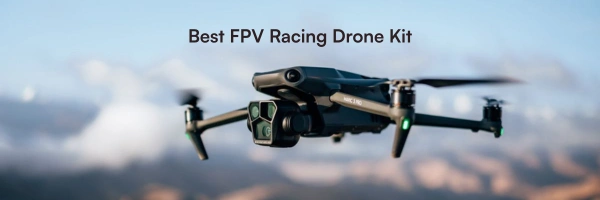
Best FPV Racing Drone Kit

FPV (First Person View) racing is one of the fastest-growing segments in the drone community. What started as a hobby is now a competitive sport with global events, dedicated tracks, and sponsorships. Whether you dream of flying through forest gates at 100 km/h or building your own custom racer from scratch, choosing the right FPV racing drone kit in 2025 is key to performance and fun.

This guide breaks down everything you need to know — from motors and batteries to frames and FPV goggles — so you can pick the perfect setup for your budget and skill level.

FPV drone

Understanding What FPV Racing Really Means

FPV stands for “First Person View,” meaning you see what your drone sees through a camera mounted in front of the airframe. This live video stream is transmitted to your FPV goggles or screen, giving a real-time piloting experience — as if you’re sitting inside the drone cockpit.

Racers use FPV to fly around obstacles and through tight gates at high speed. Unlike GPS camera drones for photography, FPV racers are built for agility, durability, and speed, not stability or autonomous flight.

What Makes a Good FPV Racing Drone Kit?

When you buy a kit, you get a bundle of all essential components needed to build and fly an FPV racing drone. Here’s what to look for in 2025:

Frame and Build Quality
Your drone’s frame is its skeleton. Look for a carbon-fiber frame — it’s light, strong, and absorbs crashes well.
Typical sizes: 5-inch frames are standard for racing.
Lightweight frames (under 150 g) boost speed.
Ensure ample space for electronics and battery.

Motors and Propellers
The motor and prop combination defines your thrust and response. In 2025, most FPV racing kits use brushless motors rated between 2300 and 2800 KV.
Higher KV = more speed, less efficiency.
Lower KV = smooth control, longer flight.
Propellers should match motor power — usually 5 inches with 3 or 4 blades for tight cornering.

Electronic Speed Controllers (ESCs)
ESCs control how fast each motor spins. A good ESC ensures smooth power delivery and precise throttle response. Opt for BLHeli 32-bit ESCs rated for 30–45 A for modern racing builds.

Flight Controller
The flight controller is the drone’s brain. Look for models compatible with Betaflight, EmuFlight, or INAV. They provide fine tuning for racing stability, custom PIDs, and gyro control.

Features to consider:
Gyro sampling rate ≥ 8 kHz
Built-in OSD (On-Screen Display)
Blackbox logging for tuning

FPV Camera and Video Transmitter (VTX)
This is what gives you that immersive first-person view.
Choose a camera with low latency (< 20 ms) and high dynamic range for clear images in bright or dark conditions.
The VTX decides how far and how clear your video signal reaches.
Look for adjustable power (25–800 mW) for local and long-range races.

FPV Goggles and Transmitter System
Goggles are your window into the race. Options range from budget box-style to premium digital systems. In 2025, digital FPV has become mainstream with HD video and crisp latency-free feeds.

What to look for:
Resolution ≥ 720 p
Low latency digital transmission
Adjustable IPD and comfort fit
For radio controllers, protocols like ELRS (ExpressLRS) and Crossfire dominate due to low latency and long range.

Battery and Power System
FPV drones rely on LiPo batteries. Most racing builds use 4S or 6S packs.
4S = stable and easier for beginners.
6S = higher power and efficiency for pros.
Pick batteries with high C-rating (≥ 80 C) for instant burst power. Always balance-charge to avoid damage or fire risk.

Radio Receiver and Range
Make sure your receiver matches the protocol of your controller. Crossfire and ELRS are preferred for low latency and minimal signal loss. For casual flyers, FrSky still offers affordable and reliable options.

Pre-Built Kit vs Custom Build

If you’re new to FPV, a ready-to-fly kit is a great starting point. It comes pre-assembled and tuned. You can begin flying immediately without soldering. Popular options include DJI FPV Combo and Skykart’s custom FPV starter kits.
However, if you’re a tinkerer or competitor, custom builds allow you to fine-tune every component for speed, durability, and style.

Pros of Pre-Built Kits:
No assembly required
Pre-tuned PID settings
Beginner friendly

Pros of Custom Builds:
Full control over parts
Upgradeable over time
Personal style and performance tuning

What to Look for When Buying Online in 2025

1. Component Compatibility
Ensure motors, ESCs, and controllers work together. Voltage mismatch can fry your build.

2. Availability of Spare Parts
FPV racing means crashes — a lot of them. Choose a brand or supplier that offers easy access to props, arms, motors, and camera mounts. Platforms like Skykart India provide quick spares and repairs.

3. After-Sales Support and Warranty
Unlike toy drones, racing builds need tuning and repairs. Always check the supplier’s warranty policy and customer support rating.

4. Firmware and Software Updates
Modern flight controllers receive firmware updates to fix bugs and improve performance. Pick brands that regularly update their software.

5. Community and Tutorial Support
Join online FPV communities for setup guides, PID tuning advice, and flight practice tips. A supportive community can shorten your learning curve by months.

FPV Racing Drone Trends in 2025

Digital video transmission has become standard, replacing analog systems.
AI-assisted flight controllers help with auto-tuning and crash recovery.
3D-printed frames and parts allow custom designs and lightweight mods.
Hydrogen and Li-ion hybrid batteries are emerging for longer flight time.
Training simulators now mirror real-world physics for FPV practice.

Conclusion

FPV racing in 2025 is faster, smarter, and more accessible than ever. Choosing the best FPV racing drone kit is about balancing power, durability, and support. Whether you buy a DJI combo or a Skykart custom kit, focus on compatibility, after-sales service, and learning resources.

With the right FPV kit, you won’t just fly — you’ll race like you’re inside the machine. The thrill of FPV racing is limitless, and 2025 is the best time to start your journey into this high-speed world of aerial adrenaline.

Agriculture drones have transformed Indian farming. From paddy fields in Tamil Nadu to cotton farms in Gujarat, drone sprayers are helping farmers save time, reduce chemical wastage, and improve yields. But while most buyers focus on price and specifications, one crucial factor often gets ignored — after-sales support.

Why Trusted After-Sales Support Matters for Agriculture Drone Buyers in India

Buying a drone is easy. Keeping it running season after season is the real challenge. In a country like India, where drones operate in dusty fields, extreme temperatures, and long working hours, reliable after-sales service can make or break your investment.

At Skykart, we’ve seen that what matters most after the purchase is not just how advanced your drone is — it’s who stands behind it when something goes wrong.

Agriculture drones work in tough conditions

Agriculture drones are exposed to moisture, chemicals, and long hours of operation. Unlike photography drones, they spray liquids that can corrode pumps, motors, and nozzles over time.
Without proper maintenance and spare parts availability, even the most expensive drone can face frequent breakdowns. Trusted after-sales support ensures your drone stays flight-ready during critical spraying seasons.

Downtime equals crop loss

Every hour your drone is grounded during spraying season can mean lost yield and wasted chemicals. If you have to wait weeks for spare parts or service, you could miss vital spraying windows.
Skykart understands this urgency. That’s why it focuses on fast service turnaround and nationwide support. Quick repairs and easy part replacements help farmers keep their drones flying when they need them most.

Clear and affordable parts replacement

Many first-time buyers underestimate the cost of spare parts — nozzles, propellers, motors, ESCs, and GPS modules all wear out with use. Without transparent pricing, these costs can quickly add up.
Skykart ensures that farmers know the exact price of each spare part upfront. All replacements are OEM-certified, ensuring safety, compatibility, and performance. Transparency builds trust and long-term reliability.

Trained technicians ensure professional servicing

Drone maintenance is technical. It requires calibration, software diagnostics, and precision handling. Poor servicing by untrained technicians can cause calibration errors or flight failures.
Skykart’s service engineers are professionally trained to handle agriculture drones of various brands. They use genuine diagnostic tools, follow DGCA guidelines, and ensure every drone is flight-ready after service.

Warranty and customer assurance

A trusted brand doesn’t disappear after selling you a drone. Genuine suppliers back their products with warranties and extended support.
Skykart offers strong warranty coverage for manufacturing defects and critical components. Farmers can also opt for extended service plans and annual maintenance contracts to protect their investment over the years.

Firmware and software updates

Modern drones are smart flying machines powered by software. Regular firmware updates improve flight stability, spraying accuracy, and compliance with Indian drone regulations.
Skykart ensures that your drone always runs on the latest software versions and provides assistance with updates and troubleshooting. This keeps your drone safe, efficient, and compliant.

How Skykart Leads in Drone After-Sales Support

Skykart isn’t just a drone seller — it’s a support ecosystem built around Indian agriculture.

What makes Skykart different:
Nationwide service centres for fast repairs
Genuine spare parts always in stock
Professionally trained engineers
Customer support via call and WhatsApp
Transparent replacement pricing

Buying a Drone is a Long-Term Partnership

Whem you invest in an agriculture drone, you’re not just buying equipment — you’re entering a long-term partnership with your supplier. Drones need regular calibration, software updates, and occasional repairs.
A trusted after-sales network ensures your equipment runs smoothly and your investment continues to deliver returns. At Skykart, our mission is to keep farmers’ drones flying safely, efficiently, and profitably season after season.

Why After-Sales Support Defines Real Value

Farmers who buy drones based only on price often face issues later: long repair delays, unavailable parts, or unresponsive sellers. That’s why strong after-sales support is the real measure of value.
Skykart’s commitment to reliability, transparency, and service helps farmers focus on what matters most — growing healthier crops and earning better returns.

Conclusion

As agriculture drones become an integral part of Indian farming, after-sales service is emerging as the single most important factor in purchasing decisions.
Skykart’s promise of genuine parts, fast turnaround, trained engineers, and dedicated support ensures every farmer can use drone technology with confidence.

When choosing your next agriculture drone sprayer, don’t just compare prices — compare service. Because in farming, reliability is everything, and Skykart makes sure your drone stays flight-ready when it matters most.

Agras T30 vs Manual Spraying

In Indian agriculture today, time and cost matter as much as yield. With labour scarcity, increasing wages, and a push toward precision farming, many farmers (and service-providers) are asking: “Is drone-spraying really worth it compared to manual spraying?” In this post, we’ll dive deep — on cost per acre, time taken, equipment investment, labour savings — and compare the powerhouse drone Agras T30 to traditional manual methods.

Agras T30 vs Manual Spraying

Why compare drone spraying to manual spraying?

Manual spraying (knapsack sprayers, hand-held or backpack sprayers, maybe tractor-mounted booms) has been a staple for decades. But it comes with heavy labour, uneven coverage, chemical wastage, human exposure, slow speed, and sometimes high operating cost. On the other hand, agricultural drones promise faster coverage, better precision, lower exposure, and potentially lower cost per acre over time. For example: one study found the drone system used only about 26.97 L/ha of spray compared to 490.28 L/ha for knapsack methods — that’s a huge difference.
For farmers in India who are increasingly under cost pressure, the question is not only “can we afford the drone” but “will it better our bottom line and free up time?” That is precisely what we explore with the Agras T30 in mind.

Quick specs: DJI Agras T30 at a glance

The Agras T30 is one of the flagship spraying drones from DJI. Key features:
30 L spray tank (or large payload) and wide spray width (up to ~9 m) for efficient coverage.
Field efficiency: DJI claims up to ~40 acres/hour in optimal conditions.
Equipped with advanced sensors (omnidirectional radar, obstacle avoidance) for safer autonomous spraying.

In short: a high-capacity tool designed for commercial/large-farm operations.

Time savings: How long does each method take?

Manual Spraying: Typical manual backpack/knapsack spraying in India is painfully slow. One comparative study found the manual or knapsack method covered only ~0.082 ha/hour (for the manual operator) versus ~4 ha/hour with a drone.

Drone Spraying (Agras T30):

With the Agras T30, coverage jumps. DJI claims up to ~16.5 acres/hour under certain conditions.
Other sources in India confirm some drones can cover 20-50 acres/day and spray one acre in just 5-10 minutes.

Bottom line:

For one acre, manual might take 1-4 hours (depending on size & terrain). The drone can do it in ~10-15 minutes or less (depending on setup). That’s a huge time saving — often freeing labour for other tasks, or allowing more acreage per day.

Cost Savings: Labour, chemicals, equipment

Manual Spraying Costs:
Labour: Many manual sprayers pay workers by day or acre. The cumulative labour cost for an acre may run into hundreds to thousands of rupees depending on wage levels.
Chemical/over-spray: Manual spraying tends to be less precise, more overlap, more chemical usage. One study: knapsack method applied ~490 L/ha vs ~27 L/ha with drone. That suggests big savings in consumables.
Equipment: Backpack sprayer cost is low upfront, but efficiency and yield are low.

Drone Spraying Costs:

Up-front investment: Entry-level spray drones (10-20 L) around ₹3-6 lakh in India; larger models like the 30L T30 cost more.
Hiring service model: For farmers who don’t own the drone, hiring drone spraying services in India typically costs ~₹300-₹700 per acre.
Chemical and water saving: With drone’s precision, the chemical use and water use per acre drop significantly — one study: up to 94% water savings vs manual.
Yield benefits: Better coverage and timing may improve crop health and ultimately yield and profit (a harder metric to quantify but reported).

Comparative cost example (India):

Manual spraying: perhaps ₹500-₹1,000+ per acre when labour + chemicals + overheads are included.
Drone hiring: ~₹300-₹700 per acre, with faster coverage and lower waste.
If owning drone: amortised cost drops further per acre when covering many acres.
Thus, for farms with enough size or service-providers covering multiple farms, the ROI from drones like the Agras T30 becomes compelling.

When does the Agras T30 make sense?

Farms with large acreage where multiple acres need spraying quickly (monsoon, pest outbreaks).
Service providers or contractors who cover many farms and can amortise investment.
Crops where timing matters (orchards, fruit trees, large fields) — the T30’s wide spray width and high capacity fit well.
Desire to reduce chemical usage, labour exposure, and improve precision.

If you’re a small farmer with a single acre and minimal labour cost, maybe manual still makes sense — unless you hire drone services like ours!

DJI Agras T30

DJI Agras T30
India’s agriculture sector is rapidly embracing drone technology to boost productivity and reduce costs. From paddy fields to fruit orchards, farmers are realizing how drones can spray pesticides, fertilizers, and micronutrients more evenly and efficiently.
Among all agriculture drones, the DJI Agras T30 stands out as one of the most powerful and intelligent spraying drones ever designed. It’s not just a drone—it’s a precision farming solution built for Indian conditions.

Table of Contents
What Is the DJI Agras T30 Agriculture Drone?
Key Specifications of DJI Agras T30
Why the Agras T30 Is a Game-Changer for Indian Farmers
Real-World Benefits for Indian Agriculture
Challenges & Considerations Before Buying
Conclusion: The Next Step in Smart Farming

What Is the DJI Agras T30 Agriculture Drone?


The DJI Agras T30 agriculture drone is a 30-litre agricultural spraying drone engineered for large-scale, precision spraying operations. Built by DJI—the global leader in drone innovation—the T30 combines high payload capacity, autonomous flight planning, and obstacle avoidance for safer, faster, and more efficient farm spraying.
It supports both liquid spraying and granular spreading, making it ideal for pesticides, fertilizers, and seeds across diverse crops like rice, sugarcane, cotton, wheat, and horticulture plantations.

Key Specifications of DJI Agras T30


Spray Tank Capacity 30 Litres
Spray Width Up to 9 meters
Flow Rate 8 Litres per minute
Max Spraying Efficiency ~40 acres/hour (ideal conditions)
Payload for Spreading Up to 40 kg (DJI Agras Spreading System 3.0)
Flight Time (per battery) ~18–20 minutes
Protection Level IP67 (dust & water resistance)
Radar System Spherical radar for 360° obstacle detection
Camera Dual FPV cameras (front & rear)
Frame Foldable carbon-fiber arms for easy transport
Control DJI RC Plus or Smart Controller Enterprise
Compatibility Supports RTK for centimeter-level accuracy

Why the Agras T30 Is a Game-Changer for Indian Farmers


1. Covers More Area, Faster
The T30 can spray up to 40 acres per hour, drastically cutting time compared to manual spraying. Farmers can cover large farmlands in a single morning, reducing labor and downtime.

  1. Precision Spraying Saves Cost
    Using RTK + AI-based route planning, it ensures each drop lands exactly where it’s needed. This reduces chemical wastage by 20–30% and boosts productivity.

  2. Safer for Workers
    Manual pesticide spraying exposes workers to harmful chemicals. The DJI Agras T30 drone keeps farmers safe by automating the entire process from a distance.

  3. Smart Obstacle Avoidance
    With spherical radar and AI vision, it can fly safely around trees, wires, or uneven terrain—ideal for India’s mixed-layout farmlands.

  4. Multi-Purpose Utility
    Beyond spraying pesticides, the Agras T30 agriculture drone can also spread seeds, granular fertilizers, and nutrients, making it an all-in-one agricultural tool.

Real-World Benefits for Indian Agriculture


Reduced labor dependency – One pilot replaces 5–6 manual sprayers.
Increased coverage speed – Ideal for large paddy, cotton, or sugarcane farms.
Uniform droplet distribution – Ensures consistent chemical coverage.
Data-driven farming – Each flight logs data, improving planning and compliance.
Government subsidy eligibility – The Agras T30 agriculture drone is covered under several agri-drone subsidy programs in India, reducing upfront cost.
Challenges & Considerations Before Buying
Initial investment can be high for small farmers; group ownership or service models work better.
DGCA training & license required for commercial spraying.
Battery logistics – Multiple batteries recommended for continuous operations.
Periodic maintenance needed to ensure nozzle calibration and radar accuracy.

The Next Step in Smart Farming


The DJI Agras T30 is more than just an agriculture drone—it’s a step toward precision, profitability, and sustainability in Indian farming. By adopting this technology, farmers can save input costs, reduce labor, and increase yields while contributing to India’s vision of smart, digital agriculture.

Buy DJI Agras T30 from Skykart.in
Ready to transform your farming operations?
Explore the DJI Agras T30 on Skykart.in— India’s trusted destination for agriculture drones, spare parts, and accessories!

Buy smart. Spray smarter. Choose DJI Agras T30 at Skykart.in

Agriculture Drone

Farming has always been about hard work. From sunrise to sunset, farmers walk across acres of land, checking crops, spraying pesticides, and worrying about whether the harvest will be good. But just like tractors changed farming years ago, today a new tool is helping farmers do their work faster and smarter — the agricultural drone.

These drones are not the ones used for wedding videos or travel photography. They are built specially for farming. With cameras, sensors, and spraying systems, drones are becoming a farmer’s extra set of eyes and hands in the sky. The services that come with these drones — often called agricultural drone services — are making a big difference in the fields.

Let’s take a look at the real benefits farmers are seeing when they bring drones into their daily work.

Agricultural Drone

Table of Contents:

1.  What Are Agricultural Drones?
2. Top Benefits of Agricultural Drone Services for Farmers
 2.1 Save Time and Reduce Effort
 2.2 Monitor Crop Health with Precision
 2.3 Safe and Efficient Spraying of Pesticides & Fertilizers
 2.4 Cost-Effective Farming
 2.5 Boost Crop Yield and Quality
 2.6 Real-Time Field Monitoring
 2.7 Farm Mapping and Planning
 2.8 Protecting the Environment
 2.9 Access Hard-to-Reach Areas
 2.10 The Future of Farming
3. Final Thoughts – Smarter, safer, and more sustainable farming

What Are Agricultural Drones?

Agricultural drones are small flying machines that help farmers manage their fields. They can fly over crops, take clear pictures, show which plants are healthy and which are not, spray pesticides or fertilizers, and even create maps of the land.

Instead of spending hours walking under the hot sun, a farmer can now get the same work done in a fraction of the time with a drone.


1. Saving Time and Effort

Imagine a farmer with 100 acres of land. Checking each corner of the farm on foot could take days. A drone can scan the entire field in a single morning.

  • Work gets done faster.

  • Farmers save their energy for other tasks.

  • Large areas are covered in hours, not days.

This is one of the main reasons farmers are adopting agriculture drone services in India.


2. Keeping an Eye on Crop Health

Drones can see things we can’t. With special cameras, they detect problems like pest attacks, water stress, or nutrient shortages before they become serious.

When farmers use drone services, they can:

  • Spot unhealthy crops quickly.

  • Take action before damage spreads.

  • Improve their chances of a healthy harvest.

This is often called precision farming because it gives farmers precise details about their crops.


3. Spraying Made Safer and Smarter

In the past, farmers carried heavy tanks on their backs to spray fields — a job that was not only tiring but also risky for health. Now drones can do this safely.

  • No direct contact with chemicals.

  • Fertilizer and pesticide spraying is even and accurate.

  • Less water and fewer chemicals are wasted.

With drone spraying services, farming becomes safer for farmers and cleaner for the environment.


4. Saving Money in the Long Run

At first glance, buying or renting a drone may feel costly. But when farmers see the results, they realize drones actually save money.

  • Less water is used.

  • Chemicals are applied only where needed.

  • Healthier crops lead to higher income.

Over time, the savings outweigh the initial cost, making drones a smart investment.


5. Growing More, Growing Better

The ultimate goal of every farmer is a bigger and healthier harvest. Drones support this by helping plants get the right care at the right time.

  • Higher crop yield.

  • Better quality produce.

  • More profits at the end of the season.

With drones, farmers are not just growing food — they are growing opportunities.


6. Checking Fields Anytime

Farmers worry about their crops during storms, heavy rains, or pest attacks. Instead of walking into muddy or dangerous fields, they can send a drone.

Some drones even connect directly to mobile phones, giving farmers real-time updates while they stand safely outside the field.


7. Smarter Farm Planning

Drones don’t just fly — they also map the farm. These maps show dry areas, waterlogged spots, and weak patches of crops. With this information, farmers can plan better.

  • Add water only where it’s needed.

  • Use fertilizers more efficiently.

  • Rotate crops based on soil conditions.

This is part of smart farming, where decisions are guided by data, not guesswork.


8. Helping the Environment

Too much chemical use harms the soil, water, and nearby communities. Drones reduce this by applying fertilizers and pesticides only where required.

  • Lower chemical waste.

  • Healthier soil and crops.

  • More eco-friendly farming practices.

This shift makes agriculture more sustainable for the future.


9. Reaching Hard-to-Access Areas

Not all farms are flat and easy to walk on. Some are on hillsides or uneven ground. For farmers in such areas, drones are a lifesaver.

They can fly where people struggle to reach, saving farmers both time and energy while still keeping an eye on every part of the farm.


10. The Future of Farming

Agricultural drones are already making a big difference today. But the future is even brighter. With artificial intelligence, drones will soon be able to work almost on their own. Farmers will simply set the task, and the drone will take care of scanning, spraying, and reporting.

This is why many call drones the future of farming.


Final Thoughts

Farming has always been about resilience and innovation. Today, agricultural drone services are giving farmers powerful new ways to manage their fields. From saving time and money to protecting the environment and boosting crop yields, drones are truly a partner in the sky.

For Indian farmers looking ahead, adopting drone technology in agriculture isn’t just an option — it’s the path to smarter, safer, and more profitable farming.

Shop your agri drone parts here!

indian drone industry
GST Indian Drone Industry

The Indian drone industry is rapidly evolving, driven by technological advancements and supportive government policies. The recent 56th Goods and Services Tax (GST) Council meeting has introduced significant tax structure changes for drones and their components, aligning with India’s ‘Make in India’ initiative. This post will detail these revisions, including the unified GST rate, implications for components, DGFT import restrictions, input tax credits, and new IGST exemptions. Understanding these shifts is crucial for stakeholders to navigate the new landscape and capitalize on opportunities.

Table of Contents:
   1) Introduction
   2) The 56th GST Council Meeting: A Paradigm Shift for Drones
   3) Output Tax vs. Input Credits: Addressing the Inverted Duty Structure
   4) DGFT Import Restrictions on Drones: A Continuing Policy
   5) GST Treatment of Key Imported Drone Components
   6) New IGST Import Exemptions Relevant to Drones
   7) Compliance and Strategic Considerations for Drone Businesses
   8) Conclusion

The 56th GST Council Meeting: A Paradigm Shift for Drones

The 56th GST Council meeting in September 2025 marks a pivotal moment for the Indian drone industry, aiming to foster growth and streamline taxation for unmanned aircraft.

Unified 5% GST Rate for Drones

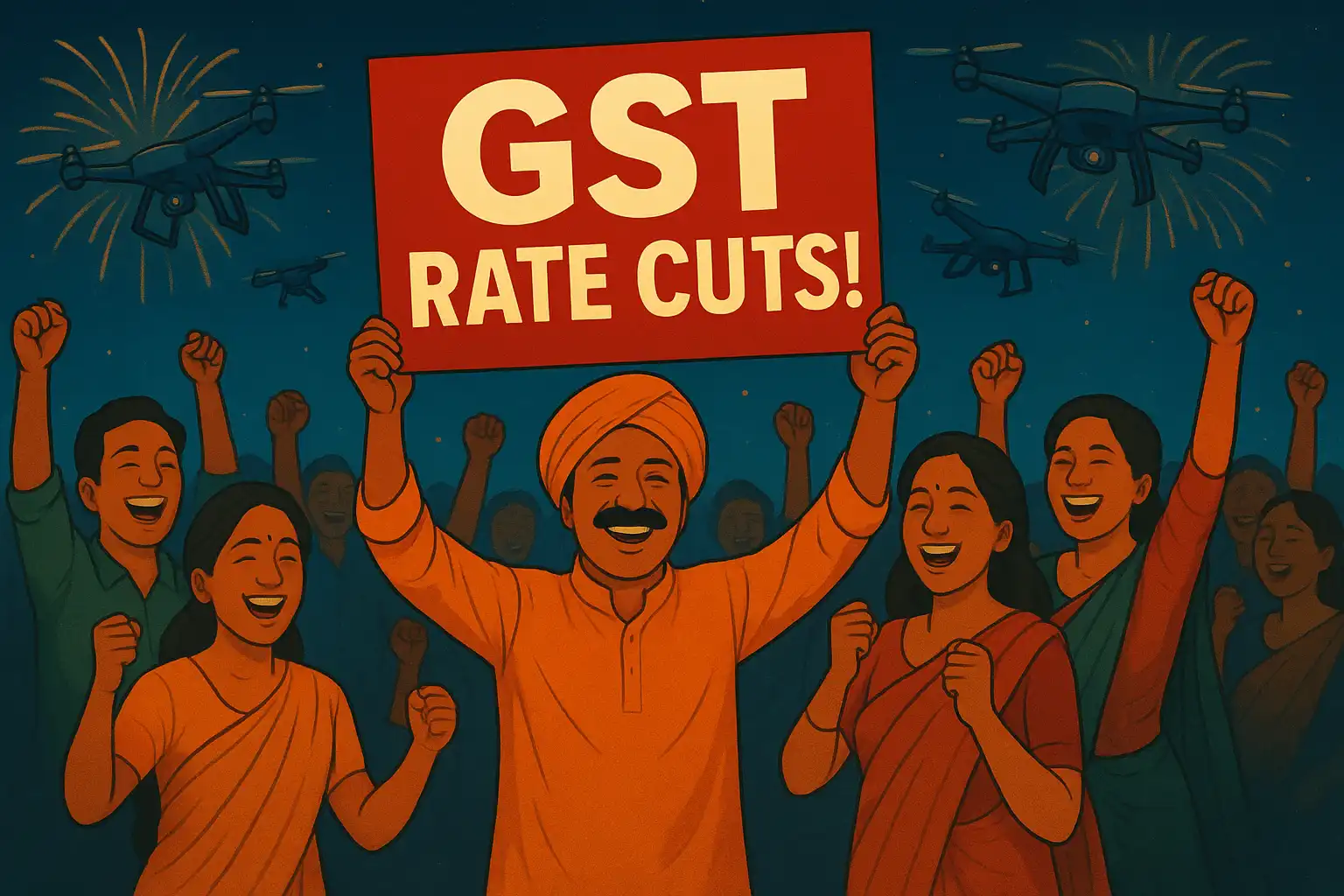
The most impactful decision is the uniform 5% GST rate on all drones, replacing a fragmented tax structure (5% for business, 18% for camera-equipped, 28% for personal/hobby drones). This simplification reduces costs, encouraging wider adoption in agriculture, public safety, and infrastructure. It aims to democratize drone technology, making it more accessible and affordable.

Elimination of Higher Tax Slabs

This unified 5% rate aligns with a broader GST slab rationalization, collapsing rates to 5% and 18% for most goods. Drones previously in 18% or 28% slabs now fall under 5%. This contrasts with manned aircraft for personal use, which saw an increase from 28% to 40%, highlighting the government’s strategic promotion of drones as a technology booster. This signals strong industry support, stimulating demand and accelerating technological integration.

Effective Date and Industry Preparedness

The new GST rate takes effect from September 22, 2025. This provides businesses a short window to update tax codes, invoicing, and accounting. From this date, all drone sales will incur only 5% GST. This timely implementation allows for smooth transition, making drones more affordable and boosting demand in key sectors, aligning with government initiatives to increase drone usage. Businesses should adjust pricing and marketing to leverage these favorable conditions.

Output Tax vs. Input Credits: Addressing the Inverted Duty Structure

The 5% GST on finished drones creates a potential inverted duty structure for manufacturers, where input GST (e.g., 18% on parts) is higher than output GST. This can block working capital and impact liquidity.

Streamlined Refunds and Provisional Credits

To counter this, the Council introduced a 90% provisional refund of accumulated input GST credits, based on automated checks. This expedites the process, reduces administrative burden, and ensures manufacturers’ financial health, encouraging continued investment.

Strategic Procurement and Cash Flow Management

Manufacturers should claim these refunds by maintaining meticulous records, using accurate HSN codes, and timely filing GST returns (GSTR-1 and GSTR-3B). Sourcing more items locally under lower GST rates can also help manage inversion. This approach, combined with streamlined refunds, eases cash-flow strain, ensuring the tax reduction genuinely benefits manufacturers by preventing unutilized credits and fostering a virtuous cycle of demand and production.

DGFT Import Restrictions on Drones: A Continuing Policy

Despite GST changes, DGFT import restrictions on drones remain in place as of 2025, a cornerstone of India’s ‘Make in India’ strategy.

Import Ban on Complete Drones

The DGFT prohibits importing finished drones (CBU, SKD, CKD), with limited exceptions for R&D or defense/security, requiring specific licenses. Commercial entities cannot import off-the-shelf foreign drones without authorization, creating a protected market for domestic manufacturers.

Components Allowed: Fostering Domestic Manufacturing

The import ban does not extend to drone parts, which are classified as ‘Free.’ This encourages domestic assembly: manufacturers import parts (motors, frames, electronics) and build drones locally. This policy remains unchanged, ensuring value addition and employment generation within India.

Rationale and Continuity with ‘Make in India’

This policy aligns with India’s drone policy and PLI scheme, forcing local assembly and incentivizing foreign OEMs to invest in India’s drone ecosystem. This consistent approach signals a long-term commitment, requiring manufacturers to plan around component imports and domestic assembly, unless under specific exceptions.

Compliance Tips for Component Imports

Firms importing parts must maintain clear documentation, using correct HS codes (Chapter 88 for aircraft parts) to prove shipments are components, not complete drones, to avoid severe compliance actions. WPC clearances for radio-frequency modules are also essential. All standard import regulations (customs duties, safety certifications) apply and must be diligently followed.

GST Treatment of Key Imported Drone Components

While finished drones have a 5% GST, individual components vary. Most retain 18% unless classified as ‘aircraft parts’ at 5%. Accurate HSN codes are vital for compliance and cost optimization.

Remote Controller (e.g., Skydroid T12 – HS 8526.92.00)

Remote controllers are generally taxed at 18% GST as electronic equipment, not ‘aircraft parts.’ This applies to imported controllers (18% IGST, reclaimable as input credit). While defense-related communication devices may have IGST waivers, commercial controllers typically do not.

Flight Controller Module (e.g., Autopilot Board – HS 8807.30.20)

Flight controllers, integral to drone operation, are classified under HS 8807 (‘parts of aircraft’) and attract 5% GST. This rate remains unchanged and aligns with the finished drone’s rate. Correct HSN usage is crucial to avail this lower rate, including for import IGST.

Motors and Propellers (e.g., Brushless Motors, Prop Sets – HS 8807.30.20)

Drone motors and propellers, when specialized, fall under HS 8807 and qualify for 5% GST. This rate, unchanged by the Council, benefits local assembly. Generic motors/propellers used in non-drone applications might be taxed at 18%.

Airframe and Structural Parts (Frames, Airframe Kits, Landing Gear – HS 8807.30.00)

Drone chassis, airframes, and structural components are under HS 8807 and remain at 5% GST, consistent with the unified drone rate. Manufacturers should use Chapter 88 classification for these parts to benefit from the lower tax.

Spraying System Attachments (e.g., 5L Pesticide Sprayer Kit – HS 8424 or 8539)

Attachments like sprayer pumps and nozzles for agricultural drones lack specific GST concessions. They typically fall under general machinery parts (HS 8424) or electronics, attracting 18% GST. While some farm equipment saw reductions, drone-mounted sprayers did not. If bundled, the drone portion is 5%, but the sprayer value might be 18%, requiring careful taxation and compliance with mixed supply rules.

Lithium-Ion Battery (e.g., 22,000 mAh Li-Po Pack – HS 8507.60.00)

Drone batteries are classified as lithium-ion accumulators and carry 18% GST. The Council did not reduce this rate. While a specific IGST exemption exists for ‘high performance batteries for drones and specialized equipment’ (e.g., military/high-end industrial), typical commercial drone batteries still incur 18% IGST on import, reclaimable as input credit.

Battery Chargers and Power Units (e.g., 6S LiPo Charger – HS 8504.40.90)

Charging equipment and power adapters are electrical apparatus taxed at 18% GST, with no special rate introduced. Imported chargers face 18% IGST (refundable if registered), and domestically sold ones also carry 18% GST. Businesses should factor this into pricing, as the charger is taxed higher than the 5% drone. For composite supplies, it’s safer to charge 18% on spare or standalone chargers.

Payload Sensors & Electronics (e.g., LIDAR Module, RGB Camera, Radar Altimeter, Flow Meter)

Specialized drone sensors and payloads fall under various HSN categories (e.g., HS 8525 for cameras, 9026 for instruments) and generally attract 18% GST. No special category was created for drone-mounted sensors. However, for defense/government projects, new IGST exemptions for ‘parts, sub-assemblies, accessories for goods like aircrafts (including UAVs)’ may apply. Commercially, drone integrators should expect 18% IGST on most payload electronics and claim input credit.

In summary, core drone components (Chapter 88: airframe, propulsion, control) enjoy 5% GST, aligning with the finished drone. Generic/auxiliary items (batteries, standard electronics, payloads) remain at 18% (unless defense-exempt). Manufacturers must use correct HSN codes to avoid misclassification and maximize the 5% rate’s benefit, reducing overall drone cost.

New IGST Import Exemptions Relevant to Drones

The 56th GST Council introduced IGST exemptions for certain imports, primarily supporting defense and strategic sectors, with relevance to the drone industry.

Defense UAVs and Parts – IGST Exempt

Imports of defense-purpose UAVs are IGST-exempt, a significant but narrow concession as civilian drone imports remain banned. This extends to parts, sub-assemblies, spares, and accessories for defense goods (UAVs/aircraft). Companies on government defense projects can import components without IGST, provided they follow procedures (end-use certificates, defense procurement). This lowers tax costs for defense drone development, boosting indigenous defense tech.

High-Performance Drone Batteries – IGST Waiver

High performance batteries for drones and specialized equipment’ are IGST-exempt, targeting advanced battery systems for military/high-end industrial drones. This benefits cutting-edge drone programs (long-endurance, swarm drones) by allowing tax-free global sourcing of state-of-the-art batteries. It also incentivizes domestic advanced battery tech development.

Communication Equipment and Datalinks

The Council also granted IGST exemption to certain communication devices and accessories. This likely covers specialized communication modules and datalinks crucial for strategic drone operations (defense, security). These exemptions reduce costs for critical technologies, supporting advanced unmanned systems in India. Businesses should verify criteria for these exemptions.

Compliance and Strategic Considerations for Drone Businesses

Navigating India’s drone industry requires proactive compliance beyond GST changes.

Ensuring GST Compliance and HSN Code Accuracy

The 5% GST rate and component nuances demand strict GST compliance. Active GST registration, updated HSN codes, and accurate product descriptions are vital from September 22, 2025. Misclassifying parts (e.g., camera as ‘aircraft part’) can lead to audits and back-taxes. Meticulous record-keeping and timely GST returns (GSTR-1, GSTR-3B) are crucial for input tax credit refunds. Proactive internal audits help prevent discrepancies.

Other Regulatory Compliance: DGCA, WPC, BIS, CRO

Drone businesses must comply with DGCA’s Drone Rules (permissions for testing/operation, Digital Sky Platform registration). WPC approvals are essential for imported radio-frequency modules to avoid customs delays. BIS certification or CRO for electronics may also apply. Non-compliance can halt projects, so integrating these checks into procurement SOPs is vital.

Navigating the New Landscape: Opportunities and Challenges

The 56th GST Council meeting is positive for India’s drone industry. The 5% GST makes drones more affordable, stimulating demand. IGST exemptions for defense/high-performance components reinforce ‘Make in India.’ The DGFT import ban on finished drones remains, emphasizing local assembly. Businesses should highlight tax savings to customers, optimize supply chains for input taxes, and diligently claim credits/refunds. Understanding both import restrictions and GST tweaks is key to avoiding pitfalls and benefiting from government incentives, positioning enterprises strongly in this growing market.

Conclusion

The 56th GST Council meeting marks a new era for India’s drone industry with a simplified, favorable tax regime. The unified 5% GST and strategic IGST exemptions for defense-related imports and high-performance batteries reflect a clear government intent to accelerate sector growth and reinforce ‘Make in India.’ While the import ban on finished drones encourages domestic assembly, streamlined input tax credit refunds ease financial burdens. Navigating this landscape requires understanding GST implications and broader regulatory frameworks (DGCA, WPC, BIS, CRO). By adhering to guidelines, optimizing supply chains, and leveraging tax advantages, stakeholders can lead India’s drone revolution, contributing to economic development and national security.

Are you ready to harness the power of drones for your business or explore the exciting opportunities in India’s rapidly expanding drone industry?

At Skykart.in, we provide cutting-edge drone solutions, expert consultation, and comprehensive support to help you navigate the regulatory landscape and maximize your operational efficiency. Whether you are a manufacturer seeking to optimize your tax strategy, an enterprise looking to integrate drone technology, or an enthusiast eager to explore the latest advancements, our team is here to guide you.

Visit Skykart.in today to learn more about our products and services, and discover how we can help you soar to new heights in the world of drone

drone

Unlocking optimal flight performance starts with understanding the heart of your drone: its battery. Let’s explore the best power sources for your aerial adventures!

Table of Contents

  • Introduction
  • Understanding Drone Battery Types: LiPo vs. Li-ion
  • Key Battery Specifications: Decoding the Numbers
  • Choosing the Right Battery for Your Drone
  • Battery Care and Safety: Maximizing Longevity and Performance
  • Conclusion: Powering Your Passion with Skykart

Introduction

In the exhilarating world of drones, where every flight is an adventure, the battery often remains an unsung hero. Yet, it is the very heart of your aerial companion, dictating everything from flight duration and power to overall performance. Choosing the right drone battery is not merely a technical decision; it’s a crucial step towards unlocking the full potential of your drone and ensuring a safe, enjoyable, and productive flying experience. This comprehensive guide will navigate you through the intricacies of drone batteries, helping you understand the different types, their specifications, and how to select the optimal power source for your specific needs. At Skykart, we understand the critical role batteries play, which is why we offer a curated selection of high-performance drone batteries designed to keep your drones soaring higher and longer.

Understanding Drone Battery Types: LiPo vs. Li-ion

The drone market primarily relies on two main types of rechargeable batteries: Lithium Polymer (LiPo) and Lithium-ion (Li-ion). While both are lithium-based and offer excellent energy storage, they cater to different needs due to their distinct characteristics.

  • Lithium Polymer (LiPo) Batteries: These are the workhorses of the drone world, especially for performance-oriented and FPV (First Person View) drones. LiPo batteries are known for their:
  • High Discharge Rate (C-rating): This is their most significant advantage. LiPo batteries can deliver large bursts of current quickly, which is essential for the sudden power demands of drone motors during acceleration, maneuvers, and rapid ascent. This high power output translates directly to the agile and responsive flight characteristics that drone pilots crave.
  • High Power-to-Weight Ratio: LiPos offer a remarkable amount of power for their weight, making them ideal for applications where every gram counts. This contributes to longer flight times and better overall performance.
  • Flexible Form Factor: LiPo cells are typically packaged in soft, flexible pouches, allowing manufacturers to create batteries in various shapes and sizes to fit snugly into drone frames.
  • Lithium-ion (Li-ion) Batteries: While LiPo batteries dominate the high-performance drone sector, Li-ion batteries are gaining traction, particularly for long-endurance and professional applications where sustained flight time is prioritized over extreme bursts of power. Key characteristics include:
  • Higher Energy Density (per volume): Li-ion batteries can often pack more energy into a given volume compared to LiPos, leading to potentially longer flight times for the same physical size.
  • Greater Cycle Life: Generally, Li-ion batteries tend to have a longer lifespan in terms of charge/discharge cycles compared to LiPos, making them a durable choice for frequent use.
  • Improved Safety Profile: While still requiring careful handling, Li-ion batteries are often considered slightly more stable and less prone to swelling or thermal runaway compared to LiPos, especially the cylindrical 18650 or 21700 cells commonly used.
  • Lower Continuous Discharge Rate: This is their primary limitation for many drone applications. Li-ion batteries typically cannot deliver the same high, continuous current as LiPos, which can limit their use in high-performance or acrobatic drones that demand rapid power delivery.

Choosing between LiPo and Li-ion largely depends on your drone’s purpose. For high-performance, agile flight, LiPo remains the champion. For extended flight times and less demanding power requirements, Li-ion batteries are an excellent and increasingly popular choice.

Key Battery Specifications: Decoding the Numbers

Understanding the numbers and letters printed on your drone battery is crucial for safe operation and optimal performance. These specifications provide vital information about the battery’s capabilities and compatibility with your drone:

  • Voltage (V) and Cell Count (S): The Power Behind the Flight: The voltage of a battery is directly related to its cell count. Each lithium-based cell (whether LiPo or Li-ion) has a nominal voltage of 3.7 Volts. When you see a battery labeled as 3S, 4S, or 6S, the ‘S’ denotes ‘series,’ indicating the number of cells connected in series. For example:
  • 3S Battery: 3 cells x 3.7V = 11.1V nominal voltage
  • 4S Battery: 4 cells x 3.7V = 14.8V nominal voltage
  • 6S Battery: 6 cells x 3.7V = 22.2V nominal voltage
  • Capacity (mAh): How Long You Can Fly: Measured in milliampere-hours (mAh), the capacity indicates the amount of electrical charge the battery can store. A higher mAh rating generally means a longer flight time. For instance, a 22000mAh battery can theoretically deliver 22000 milliamperes (22 Amperes) of current for one hour. However, it’s important to note that higher capacity often translates to increased weight, which can impact a drone’s agility and overall flight characteristics. Therefore, selecting a battery with an appropriate capacity involves balancing desired flight time with the drone’s weight limitations and performance requirements.
  • Discharge Rate (C-Rating): The Burst of Power: The C-rating is a critical specification for drone batteries, especially LiPos, as it indicates the maximum continuous current the battery can safely deliver relative to its capacity. It’s expressed as a multiplier of the battery’s capacity. To calculate the maximum continuous discharge current, multiply the C-rating by the battery’s capacity (in Amperes). For example, a 22000mAh (22Ah) battery with a 25C rating can continuously deliver 22 Amperes x 25 = 550 Amperes of current. A higher C-rating is essential for drones with powerful motors that draw significant current, particularly during aggressive maneuvers, rapid ascents, or when carrying heavy payloads. Ensuring your battery’s C-rating meets or exceeds the peak current draw of your drone’s propulsion system is vital for preventing battery damage, overheating, and ensuring stable power delivery during demanding flight conditions.

Understanding these core specifications empowers you to select a drone battery that not only fits your drone physically but also provides the necessary power and endurance for your specific flying needs.

Choosing the Right Battery for Your Drone

Selecting the optimal drone battery involves a careful consideration of several factors to ensure compatibility, performance, and safety. Here’s a guide to help you make an informed decision:

Drone Type and Size: The type and size of your drone are primary determinants. Small, lightweight drones (like micro FPV quads) will require smaller, lighter batteries, often with lower capacities. Larger, heavier drones, especially those designed for professional applications like agricultural spraying or cinematic work, will demand higher capacity and higher C-rating batteries to provide sufficient power and flight time. For instance, an agricultural drone designed for extended operations will benefit immensely from a high-capacity battery like the Original Tattu 22000mAh 25C 22.2V 6S1P XT90-S LiPo Battery pack, available at Skykart.

Motor and ESC Compatibility: Your drone’s motors and Electronic Speed Controllers (ESCs) have specific voltage requirements. Always match the battery’s voltage (S-count) to what your motors and ESCs are designed to handle. Using an incompatible voltage can lead to severe damage to your drone’s electronics. Additionally, ensure the battery’s continuous discharge rate (C-rating) is sufficient to meet the maximum current draw of your motors, especially under full throttle or during demanding maneuvers.

Desired Flight Time: Battery capacity (mAh) directly influences flight time. If longer flight durations are critical for your operations (e.g., surveying large agricultural fields), opt for batteries with higher mAh ratings. However, remember that increased capacity often means increased weight, which can affect the drone’s agility and overall performance. It’s a balance between endurance and maneuverability.

Weight and Balance: The battery’s weight significantly impacts the drone’s overall weight and balance. An overly heavy battery can reduce flight performance, strain motors, and shorten flight times. Proper weight distribution is also crucial for stable flight. Always ensure the battery’s weight is within your drone’s recommended limits and that it can be mounted in a way that maintains the drone’s center of gravity.

Connector Type: Ensure the battery’s connector type (e.g., XT60, XT90, EC5) matches the connectors on your drone’s ESCs or power distribution board. Using adapters can introduce resistance and potential points of failure.

Brand Reputation and Quality: Invest in batteries from reputable manufacturers. High-quality batteries offer better performance, greater consistency, and enhanced safety. Brands like Tattu, known for their reliability and performance, are a testament to this. The Original Tattu 22000mAh 25C 22.2V 6S1P XT90-S LiPo Battery pack is a prime example of a premium battery designed for demanding professional drone applications.

By meticulously evaluating these factors, you can select a drone battery that not only powers your drone but also optimizes its performance for your specific aerial missions.

Battery Care and Safety: Maximizing Longevity and Performance

Regardless of the type, proper care and handling of your drone batteries are paramount for ensuring safety, maximizing their lifespan, and maintaining optimal performance. Neglecting battery care can lead to reduced flight times, premature degradation, or even dangerous incidents. Here are essential guidelines:

  • Use a Compatible Charger: Always use a charger specifically designed for your battery chemistry (LiPo or Li-ion) and cell count. Never use a NiMH or NiCd charger for lithium-based batteries. Modern smart chargers, like those available at Skykart, often have features for balancing cells and preventing overcharging, which are crucial for lithium batteries.
  • Never Overcharge or Over-Discharge: Overcharging can lead to battery swelling, damage, and fire hazards. Over-discharging (letting the voltage drop too low) can permanently damage the battery, reducing its capacity and lifespan. Always monitor battery voltage during flight and land your drone before the battery voltage drops below its safe minimum (e.g., 3.3V per cell for LiPo under load).
  • Proper Storage Voltage: For long-term storage (more than a few days), store LiPo and Li-ion batteries at their recommended storage voltage (typically around 3.8V to 3.85V per cell). Storing them fully charged or fully discharged for extended periods can significantly reduce their lifespan.
  • Store in a Safe Environment: Store batteries in a cool, dry place, away from direct sunlight and extreme temperatures. For LiPo batteries, it is highly recommended to store them in a fire-resistant LiPo bag or a metal ammunition box to contain any potential thermal events.
  • Handle with Care: Avoid physical damage to batteries. Punctures, crushes, or severe impacts can lead to internal short circuits and thermal runaway. Always inspect batteries for any signs of swelling, punctures, or damage before and after each use. If a battery is swollen or damaged, discontinue use immediately and dispose of it safely.
  • Allow to Cool Before Recharging: After a flight, allow your battery to cool down to ambient temperature before recharging it. Charging a hot battery can reduce its lifespan and potentially lead to safety issues.
  • Balance Charge Regularly: For multi-cell batteries (like 6S LiPo), ensure you balance charge them regularly. This process ensures that all individual cells within the battery pack have the same voltage, which is crucial for overall battery health and performance.

By adhering to these best practices, you can significantly extend the life of your drone batteries, ensure safer operations, and get the most out of your investment.

Conclusion: Powering Your Passion with Skykart

Choosing the best battery for your drone is a foundational decision that impacts every aspect of your flying experience, from flight duration and power delivery to safety and longevity. Whether you opt for the high-discharge punch of a LiPo or the extended endurance of a Li-ion, understanding the critical specifications and committing to proper battery care are essential for maximizing your drone’s potential.

At Skykart, we are committed to providing drone enthusiasts and professionals with the highest quality drone batteries and accessories. Our selection includes industry-leading options designed for reliability and performance, ensuring your aerial missions are always powered for success. For those demanding long flight times and robust power delivery, especially in agricultural or industrial applications, the Original Tattu 22000mAh 25C 22.2V 6S1P XT90-S LiPo Battery pack stands out as an exceptional choice, offering unparalleled capacity and reliability.

Ready to elevate your drone’s performance? Explore our extensive range of drone batteries and charging solutions at Skykart.in today. Find the perfect power source to match your drone and unlock new possibilities in the skies!

drone flight controller

Behind every stable hover and razor-sharp turn is one component doing millions of calculations per second—the drone flight controller.

Table of Contents

  • Introduction
  • What is a Drone Flight Controller? The Brain of the UAV
  • Key Components of a Flight Controller: Sensors and Processor
  • How a Flight Controller Works: The Control Loop
  • Advanced Features and Capabilities
  • Choosing the Right Flight Controller for Your Drone
  • Conclusion: Precision in Every Flight

Introduction

In the intricate ecosystem of an unmanned aerial vehicle (UAV), while motors provide the thrust and batteries supply the power, it is the drone flight controller that truly orchestrates the magic of flight. Often referred to as the ‘brain’ of the drone, this sophisticated piece of hardware and software is responsible for interpreting pilot commands, stabilizing the aircraft, and executing complex maneuvers with precision. Without a well-functioning flight controller, a drone would be nothing more than a collection of disconnected components. This blog post will demystify the inner workings of drone flight controllers, exploring their essential components, how they process information, and the advanced capabilities they bring to modern aerial platforms. At Skykart, we understand the pivotal role of a reliable flight controller, which is why we offer a range of cutting-edge solutions designed to ensure stable, responsive, and intelligent flight for all your drone applications.

What is a Drone Flight Controller? The Brain of the UAV

A drone flight controller (FC) is essentially the central processing unit (CPU) of an unmanned aerial vehicle. It’s a compact circuit board packed with sensors, microprocessors, and communication interfaces that work in harmony to manage every aspect of the drone’s flight. Think of it as the nervous system that connects the pilot’s commands to the drone’s physical actions, ensuring stability, responsiveness, and precise control.

The primary function of an FC is to maintain the drone’s stability in the air. Drones are inherently unstable platforms, constantly battling against gravity, wind, and the forces generated by their own propellers. The flight controller continuously monitors the drone’s orientation and movement, making thousands of tiny adjustments to the motor speeds every second to keep it level and on course. This process is known as stabilization.

Beyond basic stabilization, modern flight controllers are capable of much more. They interpret signals from the remote control, execute autonomous flight modes (like GPS hold, waypoint navigation, or return-to-home), manage power distribution, and communicate with other onboard systems such as GPS modules, Electronic Speed Controllers (ESCs), and cameras. In essence, the flight controller is the critical link that transforms a collection of parts into a cohesive, intelligent flying machine.

Key Components of a Flight Controller: Sensors and Processors

The sophisticated capabilities of a drone flight controller are made possible by a suite of integrated sensors and a powerful central processing unit. These components work in concert to provide the FC with real-time data about the drone’s state and enable it to make rapid, informed decisions:

  • Microcontroller (MCU): The Processing Powerhouse: At the heart of every flight controller is a high-performance microcontroller. This is the brain that runs the flight control software (firmware), processes sensor data, executes algorithms, and sends commands to the ESCs. Modern FCs often use powerful 32-bit MCUs, such as those based on ARM Cortex-M series processors, capable of executing millions of instructions per second to ensure ultra-fast response times.
  • Inertial Measurement Unit (IMU): The Sense of Motion: The IMU is a critical sensor package that provides the flight controller with information about the drone’s orientation, angular velocity, and linear acceleration. It typically comprises:
  • Accelerometers: These sensors measure the drone’s linear acceleration along three axes (X, Y, Z). They help the FC determine the drone’s tilt and detect changes in speed.
  • Gyroscopes (Gyros): These sensors measure the drone’s angular velocity (rate of rotation) around its three axes (roll, pitch, yaw). Gyros are essential for maintaining stability and preventing unwanted rotations.
  • Barometer: The Altitude Keeper: A barometer measures atmospheric pressure, which the flight controller uses to determine the drone’s altitude. This allows the drone to maintain a consistent height (altitude hold) and is crucial for features like automatic takeoff and landing.
  • Magnetometer (Compass): The Direction Finder: The magnetometer acts as a digital compass, sensing the Earth’s magnetic field to determine the drone’s heading or direction. This is vital for accurate navigation, especially in GPS-denied environments or for maintaining a consistent orientation during flight.
  • GPS Module: The Global Navigator: While not always integrated directly onto the FC board, a GPS (Global Positioning System) module is an indispensable component for many modern drones. It provides precise location data, enabling advanced features such as:
  • Position Hold: Maintaining a fixed position in the air.
  • Return-to-Home (RTH): Automatically flying back to its takeoff point.
  • Waypoint Navigation: Following a pre-programmed flight path.
  • Other Sensors (Optional but Common): Depending on the drone’s application, flight controllers can integrate or connect to additional sensors:
  • Optical Flow Sensors: Used for precise position holding at low altitudes, especially indoors where GPS signals are unavailable.
  • Ultrasonic/Lidar Sensors: For accurate altitude measurement and obstacle avoidance, particularly during landing or low-altitude flight.

These interconnected components form the sensory and processing backbone of the drone flight controller, allowing it to perceive its environment, understand its own state, and execute commands with remarkable precision.

How a Flight Controller Works: The Control Loop

The operation of a drone flight controller can be understood as a continuous, high-speed feedback loop, often referred to as the PID (Proportional-Integral-Derivative) control loop. This loop is the core of the flight controller’s stabilization and control system, and it repeats thousands of times per second to ensure stable flight. Here’s a simplified breakdown of the process:

1.Pilot Input: The process begins with the pilot providing input through the remote control (transmitter). These commands (e.g., roll, pitch, yaw, throttle) are received by the drone’s receiver and sent to the flight controller.

2.Sensor Data Collection: Simultaneously, the flight controller continuously gathers data from its onboard sensors (IMU, barometer, magnetometer, etc.). This data provides a real-time picture of the drone’s current state: its orientation, altitude, heading, and movement.

3.Error Calculation: The flight controller compares the pilot’s desired state (the input commands) with the drone’s actual state (the sensor data). The difference between these two is the error. For example, if the pilot wants the drone to be perfectly level, but the gyroscope detects a slight roll to the right, that roll is the error.

4.PID Controller Processing: The calculated error is then fed into the PID controller, which is a sophisticated algorithm that determines the appropriate corrective action. The PID controller has three components:

  • Proportional (P): This component looks at the current error and applies a corrective force proportional to the size of the error. A larger error results in a stronger correction.
  • Integral (I): This component looks at the accumulated error over time. It helps to correct for small, persistent errors that the P component might not fully address, such as a slight drift caused by wind.
  • Derivative (D): This component looks at the rate of change of the error. It helps to dampen the response and prevent overshooting the target, making the drone’s movements smoother and more controlled.

5.Motor Command Generation: Based on the output of the PID controller, the flight controller calculates the precise adjustments needed for each motor’s speed. For example, to correct a roll to the right, the FC will increase the speed of the motors on the right side and decrease the speed of the motors on the left side.

6.ESC and Motor Actuation: The flight controller sends these updated speed commands to the Electronic Speed Controllers (ESCs). The ESCs then adjust the power sent to each motor, causing them to spin at the newly commanded speeds.

7.Repeat: This entire process, from sensor data collection to motor actuation, repeats thousands of times per second. This high-speed feedback loop allows the flight controller to make incredibly fast and precise adjustments, resulting in the stable and responsive flight we see in modern drones.

This continuous cycle of sensing, calculating, and correcting is the fundamental principle that allows a drone flight controller to maintain stability and execute commands with remarkable accuracy.

Advanced Features and Capabilities

Beyond basic stabilization and manual control, modern drone flight controllers are equipped with an impressive array of advanced features that enhance functionality, ease of use, and safety. These capabilities transform drones from simple flying machines into intelligent, autonomous platforms:

  • Autonomous Flight Modes: Many flight controllers support various autonomous modes, allowing drones to perform tasks with minimal pilot intervention:
  • GPS Hold/Position Hold: The drone maintains a fixed position and altitude using GPS data, even in windy conditions.
  • Waypoint Navigation: The drone follows a pre-programmed route defined by a series of GPS coordinates, executing specific actions at each waypoint (e.g., taking a photo, spraying).
  • Return-to-Home (RTH): In case of low battery, loss of signal, or pilot command, the drone automatically flies back to its takeoff point and lands.
  • Follow Me: The drone autonomously follows a moving subject (e.g., the pilot) using GPS or visual tracking.
  • Terrain Following: Particularly crucial for agricultural drones, this feature allows the drone to maintain a constant height above varying terrain, ensuring uniform spraying or data collection, even over undulating landscapes. The Jiyi K++ V2 Flight Controller is known for this capability.
  • Obstacle Avoidance: Advanced flight controllers, often integrated with vision systems (cameras), ultrasonic sensors, or LiDAR, can detect and avoid obstacles in real-time. This significantly enhances safety, especially in complex environments or during autonomous operations.
  • Intelligent Battery Management: Flight controllers can monitor battery voltage and current consumption, providing real-time warnings and initiating automatic return-to-home procedures when battery levels are critical. This prevents over-discharging and protects the battery.
  • Payload Management: For industrial and agricultural drones, flight controllers can manage and control various payloads, such as spray systems, cameras, or specialized sensors. This includes precise control over spray volume, camera triggers, or data logging.
  • Flight Logging and Data Analysis: Most modern FCs record extensive flight data, including GPS coordinates, altitude, speed, motor RPMs, and sensor readings. This data can be downloaded and analyzed post-flight to review performance, troubleshoot issues, and optimize future operations.
  • Redundancy Systems: For critical applications, some high-end flight controllers incorporate redundant sensors or even dual FCs to ensure continued operation in case of a component failure, significantly enhancing reliability and safety.

These advanced features underscore the sophistication of modern drone flight controllers, enabling drones to perform complex tasks with greater autonomy, precision, and safety across a multitude of applications.

Choosing the Right Flight Controller for Your Drone

Selecting the appropriate drone flight controller is a pivotal decision that directly influences your drone’s performance, stability, and the range of functionalities it can support. Consider the following factors when making your choice:

1.Drone Type and Application: The intended use of your drone is the primary determinant. For example:

  • Racing/Freestyle Drones: These require flight controllers with high processing power and fast loop times to handle rapid maneuvers and quick corrections.
  • Cinematic/Photography Drones: Stability and smooth control are paramount, often requiring FCs with advanced vibration dampening and precise GPS capabilities.
  • Agricultural/Industrial Drones: These demand robust flight controllers capable of managing heavy payloads, executing precise spraying patterns, and supporting advanced features like terrain following and waypoint navigation. The Jiyi K++ V2 Flight Controller Kit for Agri Drones and the Jiyi K3APro flight controller kit for Agri Drones, available at Skykart, are excellent examples of controllers specifically designed for these demanding agricultural applications.

2.Sensor Suite: Evaluate the integrated sensors. While all FCs have an IMU, advanced applications might benefit from integrated barometers, magnetometers, or the ability to connect external GPS, optical flow, or LiDAR sensors.

3.Processing Power: A more powerful microcontroller (MCU) allows for faster processing of sensor data and more complex algorithms, leading to better flight performance and the ability to run more sophisticated firmware.

4.Compatibility with Other Components: Ensure the flight controller is compatible with your chosen Electronic Speed Controllers (ESCs), motors, receiver, and any other peripherals you plan to use. Check for compatible firmware (e.g., ArduPilot, Betaflight, Cleanflight) if you plan to customize your drone’s behavior.

5.Ease of Use and Configuration: Some flight controllers are more beginner-friendly with intuitive configuration software, while others offer deeper customization for experienced users. Consider your own technical comfort level.

6.Reliability and Support: Opt for flight controllers from reputable brands known for their reliability and good customer support. This ensures you have access to firmware updates, troubleshooting resources, and community support if needed.

By carefully assessing these factors, you can select a drone flight controller that perfectly aligns with your drone’s purpose and your flying aspirations, ensuring a stable, responsive, and intelligent aerial platform.

Conclusion: Precision in Every Flight

The drone flight controller is undeniably the central nervous system of any unmanned aerial vehicle, translating raw sensor data and pilot commands into the precise motor adjustments that enable stable and controlled flight. From basic stabilization to advanced autonomous operations like terrain following and waypoint navigation, the sophistication of these devices continues to push the boundaries of what drones can achieve.

Understanding how these intricate systems work is key to appreciating the marvel of modern drone technology and making informed decisions when building or upgrading your own aerial platform. A high-quality flight controller ensures not just the safety of your drone, but also the success of your missions, whether for agricultural spraying, industrial inspection, or aerial photography.

At Skykart, we are dedicated to providing the best-in-class flight controllers to empower your drone endeavors. Our selection includes advanced solutions like the Jiyi K++ V2 Flight Controller Kit for Agri Drones and the Jiyi K3APro flight controller kit for Agri Drones, designed for precision, reliability, and ease of use in demanding applications. These controllers are engineered to provide the stable and intelligent flight control essential for modern agricultural and industrial drones.

Ready to take control of your drone’s destiny? Explore Skykart’s comprehensive range of flight controllers and other essential drone components at Skykart.in today. Equip your drone with the brain it deserves and experience the difference precision engineering makes in every flight

Shopping Cart
Home
Wishlist
Shop
0
Cart
Account
Scroll to Top