
Across India and globally, government agencies are increasingly turning to drones to improve efficiency, reduce costs, enhance safety, and access hard-to-reach areas. From agriculture and infrastructure inspection to surveillance, disaster response, and urban planning, drones have evolved from experimental tools into mission-critical assets for public sector projects.
Table of Contents
- Introduction: Why Governments Are Rapidly Adopting Drones
- The Rise of Drone Technology in Indian Government Projects
- Key Government Sectors Using Drones Today
- Types of Drones Used in Government Applications
- Government Drone Procurement: How the Ecosystem Works
- Policies, Regulations, and Compliance for Businesses
- Business Opportunities in Government Drone Projects
- Challenges Businesses Must Prepare For
- Why Choosing the Right Drone Technology Partner Matters
- How Skykart Supports Government & Enterprise Drone Needs
- The Future of Drones in Public Sector Projects
- Conclusion
Introduction: Why Governments Are Rapidly Adopting Drones
For businesses operating in the drone ecosystem — including manufacturers, system integrators, service providers, and equipment suppliers — understanding how government drone projects work is no longer optional. It is a strategic necessity.
This blog explores the role of drones in government projects, the opportunities they present, and what businesses need to know to participate effectively in this rapidly growing sector.
The Rise of Drone Technology in Indian Government Projects
India has witnessed a significant push toward drone adoption, especially after the liberalization of drone rules and the launch of initiatives like Drone Shakti and Digital Sky.
Government departments are increasingly using drones to:
- Replace manual surveys
- Improve data accuracy
- Reduce human risk
- Speed up project execution
- Enable real-time monitoring
What was once limited to defense and security has now expanded into civil, agricultural, industrial, and urban governance applications.
This shift has opened doors for private businesses to collaborate with government agencies through tenders, pilots, and long-term deployments.
Key Government Sectors Using Drones Today
1. Agriculture & Rural Development
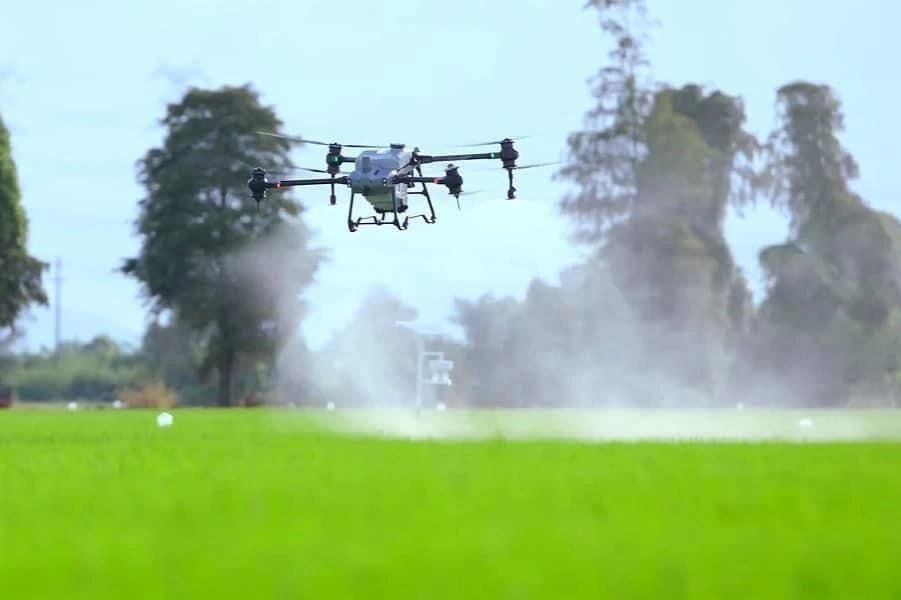
Agriculture remains one of the largest adopters of drones in India. Government projects utilize drones for:
- Crop spraying and fertilizer distribution
- Crop health monitoring
- Precision farming initiatives
- Subsidy-backed drone programs for farmers
Agriculture drones, especially 10-litre, 20-litre, and 50-litre spraying drones, are now central to state-level agricultural modernization efforts.
2. Infrastructure & Smart Cities
Drones play a vital role in:
- Road and highway inspection
- Bridge and powerline monitoring
- Railway track surveys
- Smart city mapping and planning
High-resolution cameras, LiDAR, and RTK-enabled drones help governments collect accurate geospatial data faster than traditional methods.
3. Disaster Management & Emergency Response
During floods, earthquakes, fires, and landslides, drones are used for:
- Search and rescue operations
- Damage assessment
- Live aerial surveillance
- Supply delivery to inaccessible areas
This has made drones indispensable for NDMA and state disaster response teams.
4. Surveillance, Law Enforcement & Border Monitoring
Police departments and security agencies deploy drones for:
- Crowd monitoring
- Traffic management
- Event security
- Border surveillance
Thermal cameras, night vision payloads, and long-endurance UAVs are commonly used in such projects.
Types of Drones Used in Government Applications
Government projects require specialized drones, not consumer-grade devices. Common categories include:
- Agricultural Spraying Drones (10L–50L payload capacity)
- Survey & Mapping Drones with RTK/PPK
- Surveillance Drones with thermal and night vision
- Inspection Drones for utilities and infrastructure
- Heavy-Lift Enterprise Drones for industrial payloads
Each application demands different specifications such as flight endurance, payload compatibility, camera resolution, weather resistance, and redundancy systems.
Government Drone Procurement: How the Ecosystem Works
Government drone procurement typically follows a structured process:
- Tender or RFP issuance
- Technical evaluation
- Field demonstrations or pilot projects
- Commercial evaluation
- Deployment and training
Businesses participating in government projects must ensure:
- DGCA-compliant drones
- Approved components and firmware
- Documentation and certifications
- After-sales support and maintenance readiness
Understanding this procurement lifecycle is crucial for companies aiming to scale in the public sector.
Policies, Regulations, and Compliance for Businesses
Compliance is a non-negotiable factor in government drone projects. Businesses must be aware of:
- DGCA drone rules
- Digital Sky platform requirements
- Remote ID and geofencing norms
- Import and component regulations
- Data security and privacy guidelines
Failure to comply can lead to project rejection or blacklisting, making regulatory awareness a key business competency.
Business Opportunities in Government Drone Projects
Government drone adoption has created opportunities beyond just selling drones. Businesses can participate as:
- Drone manufacturers
- Component suppliers
- Payload integrators
- Software and analytics providers
- Training and certification partners
- Maintenance and AMC providers
Additionally, many government projects prefer end-to-end solutions, opening doors for system integrators who can deliver hardware, software, training, and support together.
Challenges Businesses Must Prepare For
While opportunities are significant, businesses must navigate challenges such as:
- Long procurement cycles
- High technical qualification standards
- Price sensitivity
- Documentation-heavy processes
- Need for strong post-deployment support
Companies that invest in quality, compliance, and credibility are more likely to succeed in this environment.
Why Choosing the Right Drone Technology Partner Matters
Government agencies prioritize reliability, safety, and long-term performance. For businesses, partnering with trusted drone suppliers ensures:
- Access to enterprise-grade hardware
- Compliance with Indian regulations
- Availability of spare parts and support
- Scalability for large projects
This is where specialized drone platforms and enterprise-focused marketplaces play a crucial role.
How Skykart Supports Government & Enterprise Drone Needs
Skykart has positioned itself as a reliable drone technology platform in India, catering to:
- Agriculture drones and spraying systems
- Enterprise and industrial UAVs
- Drone components, batteries, and payloads
- Trusted global and Indian drone brands
By offering genuine products, technical guidance, and industry-specific solutions, Skykart enables businesses and government partners to deploy drones with confidence and compliance.
The Future of Drones in Public Sector Projects
The future of government drone projects points toward:
- Autonomous drone operations
- AI-powered data analytics
- Swarm technology
- Integration with GIS and digital governance platforms
- Increased budget allocations for drone programs
As policies mature and technology advances, drones will become a default tool in governance, not an exception.
Conclusion
Drones are no longer experimental tools — they are transformational assets driving efficiency, safety, and innovation across government projects in India. For businesses, this represents a powerful opportunity to participate in a fast-growing ecosystem that blends technology, policy, and public impact.
Success in this space requires deep understanding of applications, compliance, procurement processes, and reliable technology partnerships. Businesses that align early with government needs and trusted platforms like Skykart will be best positioned to lead the next phase of India’s drone revolution.